
![How Do You Onboard New Online Community Members? [A Creator’s Guide]](/images/post/How-Do-You-Onboard-New-Online-Community-Members.jpg)

The best way to onboard new online community members is to give them a clear, low-friction path from joining → participating → getting value → actually coming back again.
Because getting someone to click “join” is really only half the battle these days.
What happens immediately AFTER that, can determine whether they become an active member of your community, or completely forget they even joined three days later.
And unfortunately for us, inactivity is kind of the default.
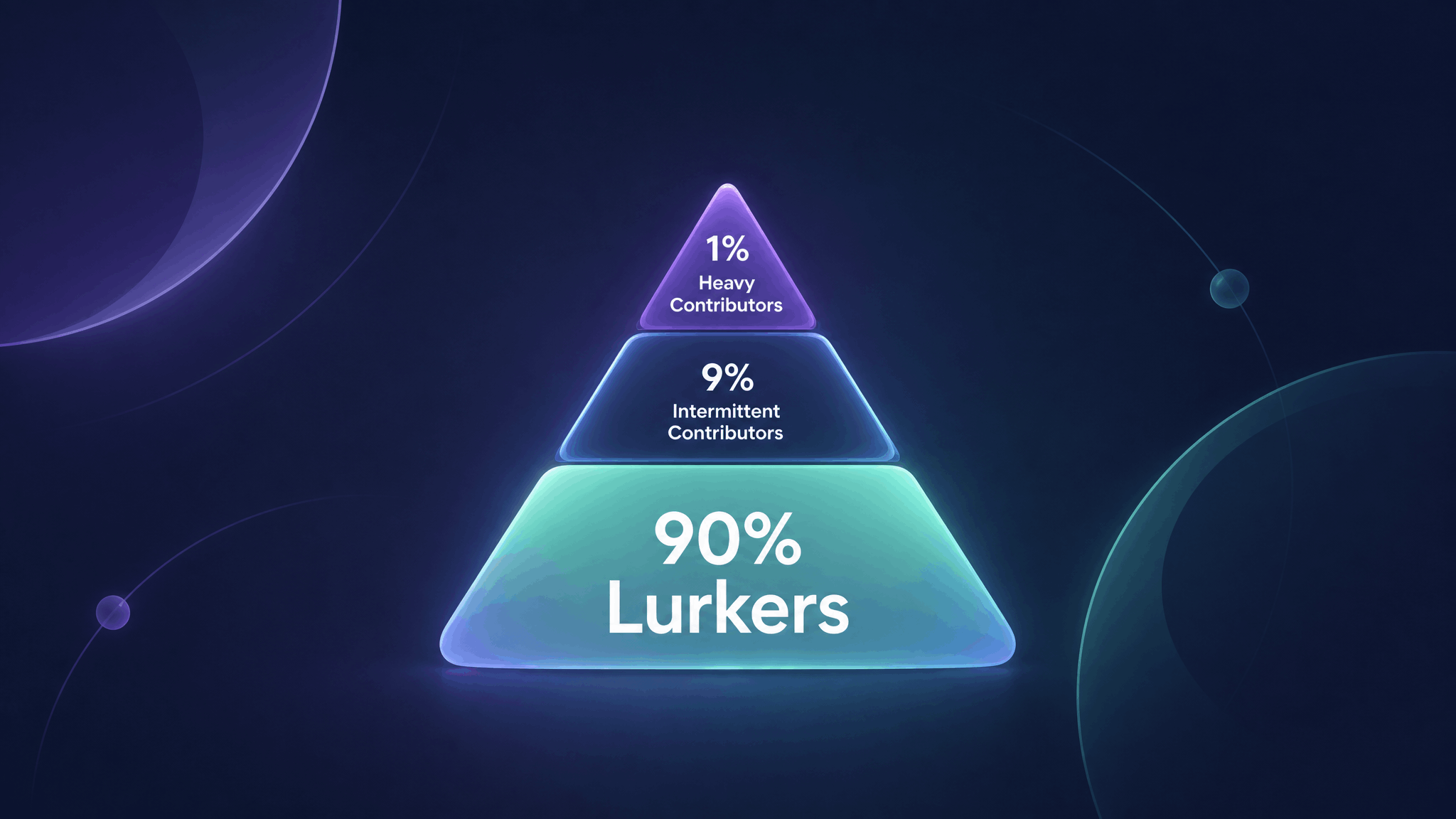
The Nielsen Norman Group’s famous 90-9-1 Rule suggests that in a lot of online communities, ~90% of users lurk without contributing, 9% participate occasionally, and just 1% account for most of the activity. (Nielsen, 2006)
Now, this isn’t some unbreakable law of the internet… so don’t lose hope, okay?
But it IS a useful reminder that most people probably aren’t going to join your online community and immediately start posting, interacting, making friends, and answering other members’ questions on their own.
You’re going to have to help get them to that point.
And ideally, your new members should be able to realize three things pretty quickly:
- There are people just like me here.
- This community is active, welcoming, and worth participating in.
- I know what I am supposed to do next, and there’s a clear benefit/reason to do it.
So, let’s dive into building an onboarding experience that actually makes all of this happen!
Community Onboarding Starts Before Someone Joins
Before we get into what happens after someone joins your community, there’s actually a little pre-work you need to do first.
You should already be setting expectations while promoting your community online
This means that if you’re inviting your YouTube subscribers, Instagram followers, or email list to your community, don’t just say:
“Hey, I made a community, come join!”
Tell them why they should join.
Who is this for?
Who else is already inside?
What are they going to learn, accomplish, or gain access to?
What can they do there that they CAN’T already do or get by just following you on instagram?
The clearer your community promise is before the sign up, the more likely someone is to give the community a real chance once they get in.
What Is Community Member Onboarding?
Community member onboarding is simply the process of taking someone from being a brand new member who has absolutely no clue what’s going on…
To someone who understands your community. Has participated in it. Experienced and even created value in it, and knows exactly why they should come back.
And that means onboarding is a lot more than a simple automated welcome email.
A great onboarding experience should quickly answer:
Why am I here?
What should I do first?
How do I get the value I joined for in the first place?
One of the biggest mistakes I see is a creator trying to answer those questions by showing a new member every single feature, discussion topic, course, and resource you’ve ever posted.
Please, don’t do that…
Focus on the OUTCOME first.
Your new member doesn’t need to get a guided tour on 47 different tabs in your community, they need momentum!
The 8-Step Online Community Onboarding Experience
Now let's get to the meat of this guide: here’s the process I would use if I were onboarding new members into a new creator community today.
1) Give Them One Clear Place to Start
The good ole’ Start Here.
There’s a reason you see this in so many successful communities…
New members should never have to look around your community wondering, “okay, now what?”
Create one obvious starting point, and include a short welcome video if you can.
Tell them:
- What the community is about
- Who it’s for
- What they can expect
- What you want them to do first
Personally, I like to put a video here because they get to actually see and hear the community owner welcoming them in.
That immediately feels more human. It’s the little things, right?
2) Give Them a Small Commitment
This won’t make sense for every community, but a lot of creators may want to give their new members a small commitment or qualifying step once they get into the group.
As an example, if I wanted my Sphere community, Heartless Audio, to revolve heavily around guitar players actually improving their playing, I could ask every new member to upload a short clip of themselves playing a riff within their first couple of days.
Nothing intimidating here…
The idea is to simply turn joining from a passive action into an active one.
You’ve already gotten them to participate once, that is progress!
3) Ask Them to Introduce Themselves
You’ve likely seen this step in action before as well.
Your introductions thread is one of the easiest ways to get a new member’s first real post in your community.
But please, don’t just write, “Introduce yourself!”
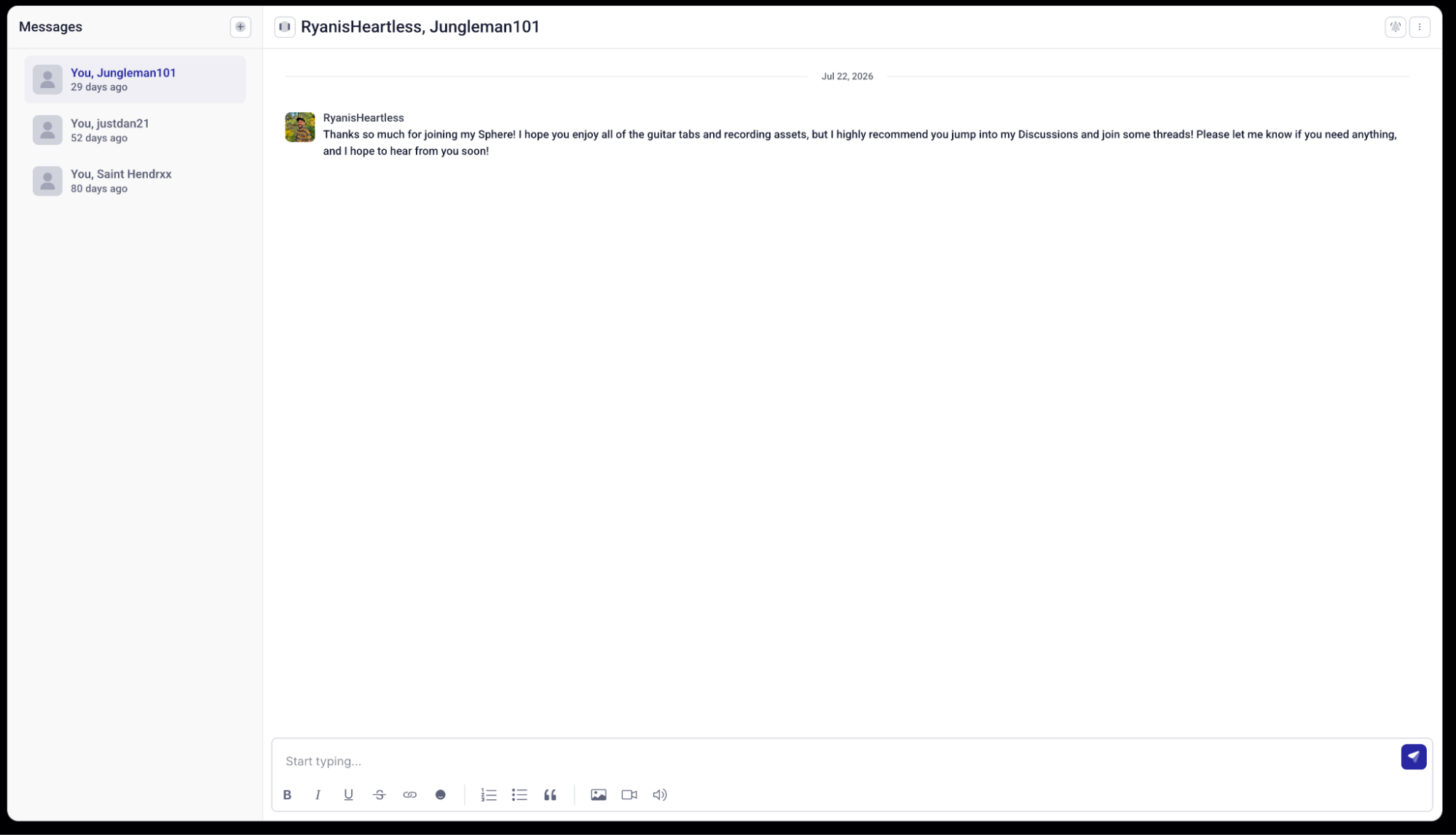
Inside Heartless Audio on Sphere, I want to know things like:
- What kind of music do you make?
- What instruments do you play?
- What is your favorite guitar or amp?
- What are you working on?
- What do you need help with?
Now other members have something to respond to besides just saying “welcome so and so!”
Maybe they learn that they play the same style of music or love the same bands.
Maybe they’ve been struggling with the exact same problem that person has.
And suddenly your new member has new connections, and starts to feel like they belong there.
4) Personally Welcome Them
This one is super simple, and has more weight behind it than you might realize.
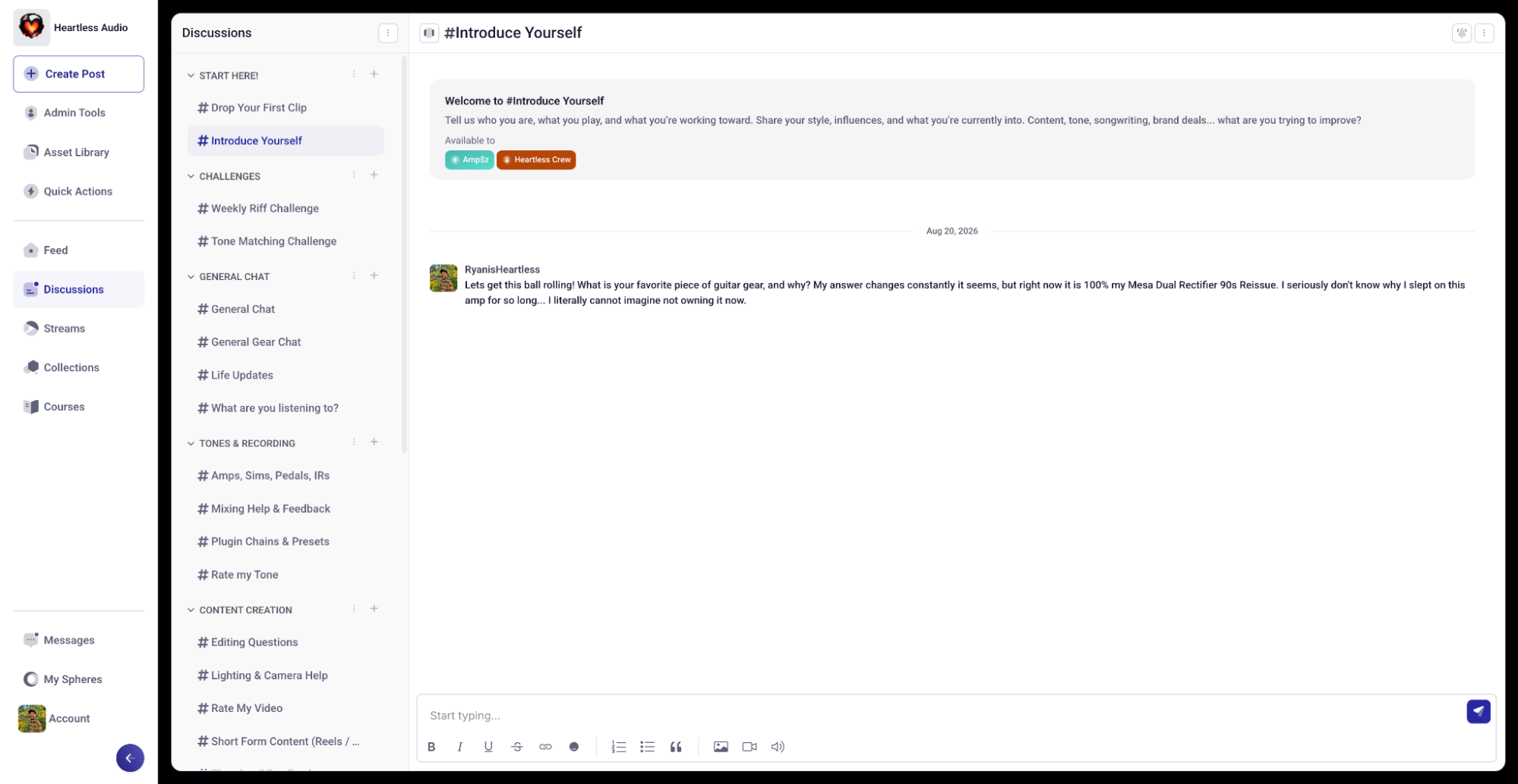
Send every new member a personal DM.
Especially while your community is still small enough to realistically keep up with doing so.
This doesn't need to be a 500 word essay here.
Just something like:
“Hey Ryan! Glad you decided to join Heartless Audio! I saw that you’re working on recording your first EP, so please be sure to check out the recording topic in Discussions, and make sure you jump into our songwriting livestream on Sunday if you’re free!”
That immediately tells the member:
Oh… an actual human noticed I joined and reached out. Depending on your community, you could also offer a short one on one onboarding call or point them toward the next group call, AMA session, or open office hours.
5) Give Them Something Valuable
Now it’s time to give them something they can actually USE.
We’ll use Heartless Audio as an example again here, as I immediately give new members:
- Guitar tabs to my songs and instagram riffs
- Logic Pro templates
- Discount codes for brands I work with
But for your community, maybe it’s:
- A free lesson
- A downloadable resource
- Templates
- Checklists
- First module of a course
- Exclusive piece of content NOT on your social media
Ideally, this should be something they couldn’t have gotten on any of your social media platforms.
Because you want them to think “okay, joining this community was worth it.”
And you want that realization to happen as quickly as possible.
6) Create a Quick Win
This one might be my favorite part of the onboarding process.
What small result or accomplishment can someone achieve during their first few days in your online community?
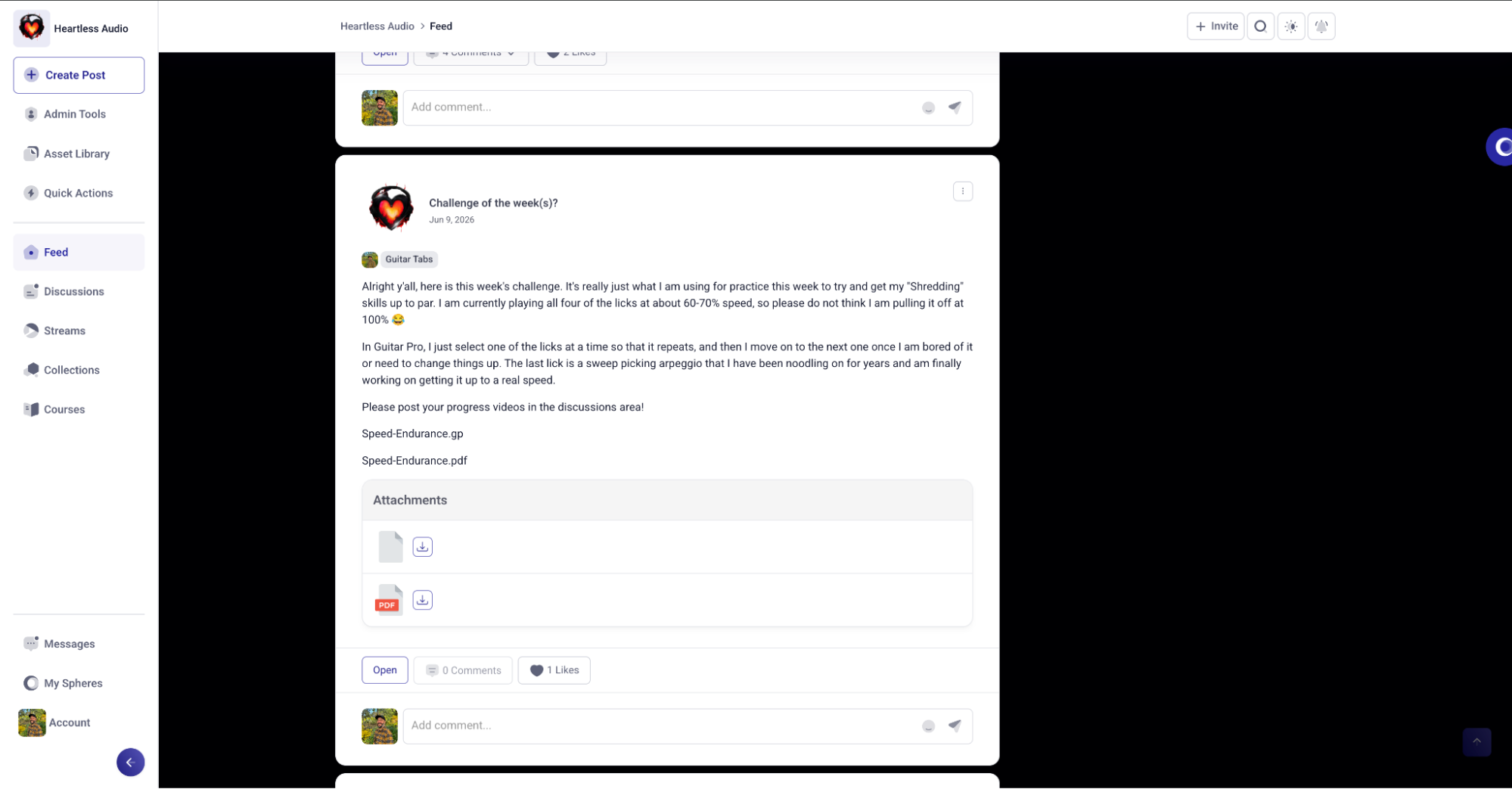
Inside Heartless Audio, that could be joining my Weekly Riff Challenge, downloading a set of tabs and learning the riff, or completing a tone matching challenge and posting their result.
Your version of this will obviously depend on your community, but maybe it’s a seven day fitness challenge?
A writing prompt.
A business exercise.
A giveaway.
A photography challenge.
The actual activity matters much less than the outcome here:
Your member needs to actually experience a little taste of the transformation your community promised them in the first place.
7) Ask for One EASY Interaction
Remember the 90-9-1 problem we talked about earlier?
Don’t fight lurking by immediately asking someone to write a 1,500 word manifesto…
Lower the barrier.
Ask them to:
- Vote in a poll
- Answer a simple question
- Reply to a prompt
- Choose the topic of your next video or livestream
- Tell you what they’re struggling with
The easier you make their participation, the easier it becomes for someone to develop the habit of participating. Seriously. Help them flex this new muscle in small steps, so it isn’t so intimidating!
8) Bring Them Into a Conversation, Then Tell Them What’s Next
Now we will want to move beyond posts and into actual interaction.
So invite them to your next:
- Livestream
- Group call
- AMA (ask me anything session)
- Open Office Hours
- Community event
This is where names and profile photos start to become REAL people.
But don’t let the onboarding process just end abruptly either.
You need to literally tell them what comes next.
“Join our Weekly Riff Challenge every Monday.”
“Open Office Hours happens every Thursday.”
“New lessons drop every other Friday.”
Whatever you want your normal community routines to look like, you need to point your new members toward it.
Because onboarding should naturally transition into routine membership.
A Simple 7-Day Community Onboarding Roadmap
If all of that sounds like a lot, let’s break it down and show you how I would spread it across a new members’ first week in your online community:
Day 0:
Welcome the new member, send them to Start Here, and shoot them a personal DM.
Day 1:
Ask them to introduce themselves in your discussions, and respond to their intro.
Days 2-3:
Give them a useful resource or asset, and push them towards their first quick win.
Days 3-5:
Ask them to vote in a poll, answer a prompt, or reply to another member.
Days 5-7:
Invite them to your next livestream, group call, or community event and show them what to participate in next.
Sounds pretty manageable, right?
Remember: the goal isn’t to bury people in pointless activities just to get them to engage.
It’s to create as many small reasons for them to log back in as possible.
What Happens After the First 7 Days?
This part is SUPER important:
Your job isn’t finished on Day 8. Onboarding should eventually turn into that members’ continued community engagement.
That means giving your members regular reasons to log back in through things like weekly prompts in discussions, challenges, livestreams, member spotlights, AMAs, and new resources.
Your goal is to create habits.
Because eventually, you want someone to open your community because it’s Tuesday and they know the new weekly challenge is live.
Not because an email reminded them your community still exists.
If you want to dive deeper on this part of the process, you’ll want to check out our guide to community-led growth for creators.
YOU Set the Engagement Standard
Especially early on, the culture of engagement in your community is going to mirror you.
If you never post… Why should your members?
If people introduce themselves and nobody responds, why would anyone else bother?
Post regularly.
Reply to people.
**Ask followup questions. **
**Celebrate somebody when they share a win. **
Make new members feel like you actually care that they’re there.
And if you’re starting from absolute zero, try this trick:
Invite a handful of your trusted friends, customers, or supporters into the community first.
Give them free access if necessary, and ask them to genuinely participate.
Because then when your first stranger joins, they won’t just be walking into the equivalent of an abandoned shopping mall.
There will be conversations happening already, and people other than yourself to help keep the conversations moving.
How I’d Onboard New Members in Sphere
If I were setting a community up inside Sphere for the first time today, I’d keep things super simple.
Inside Heartless Audio, my onboarding flow looks a little something like this:
- Start Here with a welcome video.
- Introduce Yourself in discussions.
- Send the member a quick personal DM.
- Point them toward a relevant lesson, guitar tab, or resource.
- Ask them to drop their first clip of their playing.
- Invite them to jump into the current Weekly Riff Challenge.
- Ask them to vote in my newest poll.
- Invite them to my next livestream.
- Make their next steps crystal clear.
And that is the important part…
You’re not trying to show them everything that Sphere can do.
You’re trying to get them to DO something inside of it!
Common Community Onboarding Mistakes
Here’s a few things I’d actively try to avoid:
- Throwing way too much info at new members at once
- Giving them no obvious next steps
- Explaining features instead of outcomes
- Inviting people into a completely empty community
- Asking for too much effort too quickly (Stop asking for essays…)
- Never personally acknowledging them
- Having no plan for what happens after onboarding
And remember:
The easier you make that first moment of participation, the more likely you will be to actually get a second one.
How Do You Onboard New Online Community Members? Wrap-Up
A great community onboarding experience moves a new member through a pretty simple progression:
Welcome → Participation → Quick Win → Connection → Habit
This way your members feel welcomed. They DO something. They experience some value. They connect with other human beings.
And most importantly?
They come back.
Because your goal shouldn’t be just to simply get more people through the front door.
It should be to build a community people actually WANT to return to.
So, don’t wait until you have hundreds of members to put real thought into your onboarding process.
Build that experience now.
Your earliest members are going to help establish the culture that every future member walks into.
And if you’re ready to put this onboarding process into practice, you can create your own Sphere for free and start building your community today!
Now, go welcome your people, give them an easy reason to participate, and I’ll see you on Sphere!
Frequently Asked Questions
What is Community Member Onboarding?
Community member onboarding is the important process of helping your brand new members understand where they are, what they should do first, and how they can start getting value immediately from your community.
This goes way beyond a simple welcome email.
A strong onboarding experience can help a member participate, connect with other members, and get a quick win first thing, and then understand exactly why they should log back in again.
How Long Should Community Onboarding Take?
For most creator communities, I like to think of onboarding as a 7-day experience, rather than a single moment or task.
Your new members really don’t need to do everything on Day 1.
Instead, aim to spread those early milestones out across their first week: welcome them, get them to post an introduction, give them something useful or valuable, encourage one easy interaction, and then bring them into a real conversation or livestream. After that first week and onboarding, they should be able to naturally transition into your normal community routine.
What Should a New Community Member Do First?
Give them ONE obvious first step… Simple as that.
This might be to watch your welcome video, read a Start Here post, introduce themselves in the discussions area, start a course, or download a resource and simply say hi on another members’ comment.
But making their next step impossible to miss is the whole point.
Should I Personally Message Every New Community Member?
Short answer? Yes.
If your community is still small enough to realistically do so, this can be super powerful for early engagement, and I absolutely would.
A quick DM from you can immediately make someone feel truly noticed and welcome in the community.
You can mention something they said in their introduction, recommend a useful resource or asset, or invite them to an upcoming livestream or AMA.
How Do You Get New Community Members to Actually Participate?
Make their first interaction EASY!
Ask them to answer a poll, introduce themselves using a simple prompt you provide, vote on future content, join a challenge, or reply to an existing discussion topic.
Then, acknowledge them when they do so.
Participation is so much more likely to continue when members are able to quickly learn two things:
People actually respond to me. And…
Participating here is actually worth my time.
That’s the habit you’re trying to build from Day 1.
What If New Members Still Aren’t Engaging in My Community?
Don’t immediately assume your member is the problem…
Look at your onboarding experience from their perspective:
Is the next step obvious?
Is there a clear reason for them to contribute to the community?
Are YOU regularly posting and responding?
If you consistently have new members join and then disappear, that is almost always a sign that something in your experience needs to be looked at, and soon.
Talk to the members.
Ask what they expected when they joined, what confused them, and what would have made them participate sooner.
Your inactive members can really teach you a lot about how to improve that experience for the next person, and it gives you a chance to repair that relationship at the same time!
References
Nielsen, J. (2006, October 8). The 90-9-1 rule for participation inequality in social media and online communities. Nielsen Norman Group. https://www.nngroup.com/articles/participation-inequality/